
A travel portal proposal can promise testing without explaining where that testing happens or who pays for it. Access to sample responses is different from a working version of your portal that your team can review before release.
Your buying decision is whether the proposed pre-production setup supports the work you need to approve. That means identifying what must be separate from live operations, which integrations need testing, and who performs the review. This is a staging-budget decision, not a comparison of total development prices or supplier transaction charges.
What belongs in a staging budget?
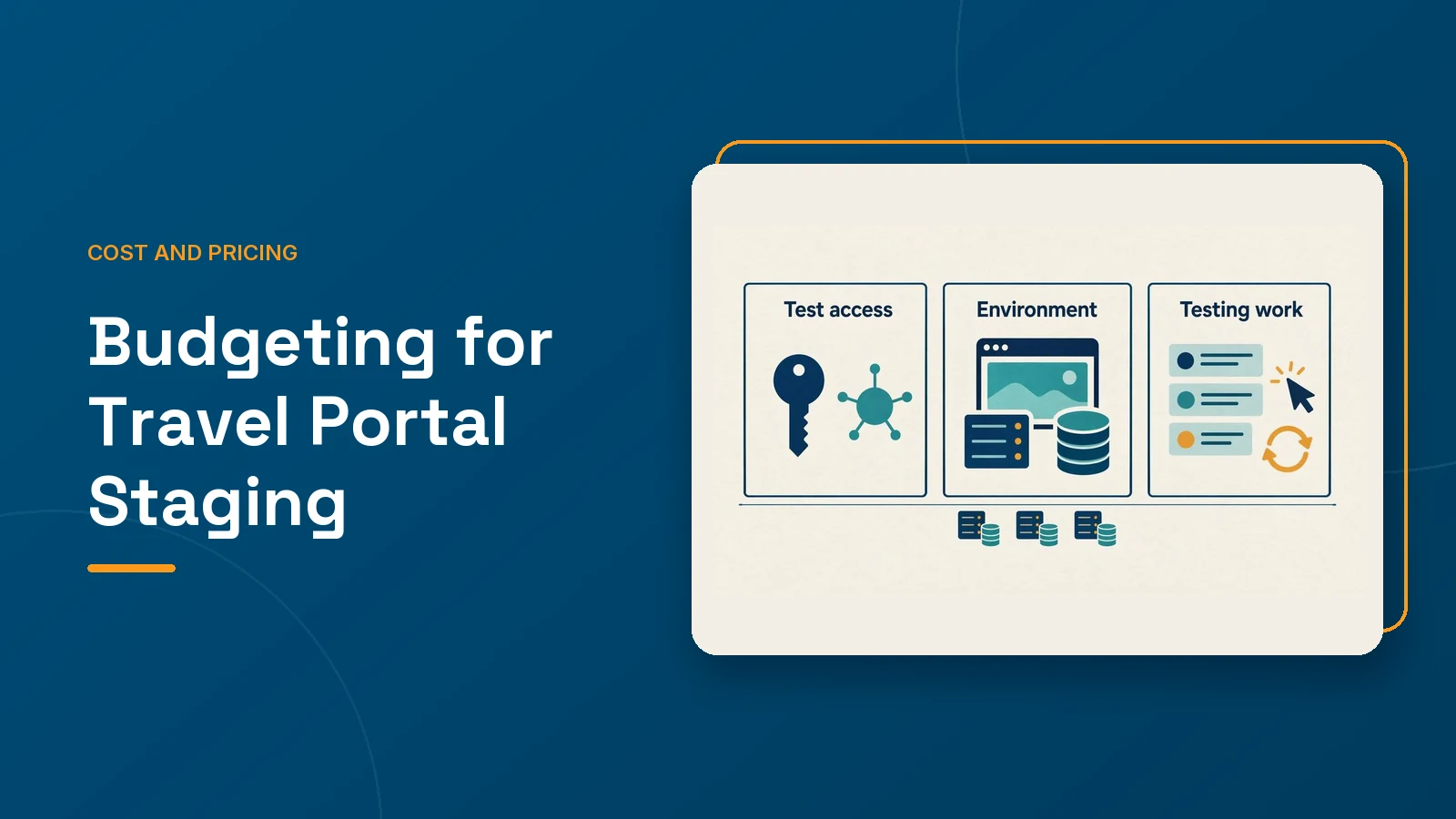
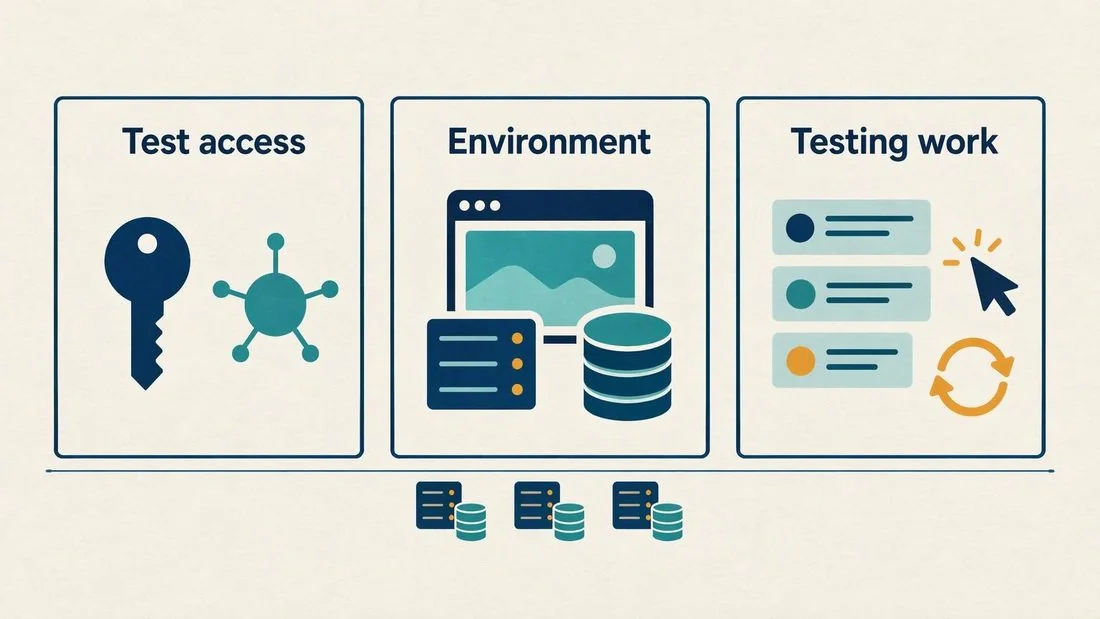
Separate permission to test from the resources that make testing possible. A login or API credential may provide access to a test service, but it does not by itself establish a deployed portal, a test database, or a buyer acceptance process.
For budgeting, treat staging as a group of deliverables rather than a single label. The relevant categories below are possible budget items, not a claim that every provider charges for each one.
An included item still needs a defined scope. For example, included setup could mean creating an environment without maintaining it through later review rounds; included testing could mean developer checks without your team's acceptance review.
Possible staging budget categories and what each buys
| Category | Purpose | Budget treatment to establish |
|---|---|---|
| Test access | Permission to use the relevant pre-production service | Included access, separate charge, or access arranged elsewhere |
| Environment setup | A deployed portal and the configuration needed for review | Included implementation work or separately scoped setup |
| Recurring resources | Hosting and supporting services while the environment remains available | Included period, recurring amount, or usage-based treatment |
| Test preparation | Test cases, test data, and account configuration | Named deliverables and responsible party |
| Test execution and retesting | Running checks, recording results, and reviewing fixes | Included effort, separately scoped work, or buyer responsibility |
Use a scope-based total, not a guessed percentage
Your staging allowance should combine separately quoted setup, recurring resources for the agreed availability period, and testing work outside the implementation scope. Add external service costs only where the proposed test plan actually requires them.
Do not assign a standard percentage of the build price without a reason. A portal's development total does not tell you which services must be duplicated or whether your buyer review requires a dedicated environment.
How closely should staging match the live portal?
Match the environment to the decision you need to make. Reviewing page layout requires different evidence from approving a booking workflow or testing how an integration handles an interrupted response.
For this buying decision, a staging environment means a pre-production version of the portal used to review a release. A supplier test endpoint is one possible dependency within that setup, not a substitute for the entire application.
If you are considering a custom connection, the broader travel API integration process provides useful context. Keep the staging discussion focused on which parts of that connection your team must exercise before approval.
Duplicate the behavior that matters
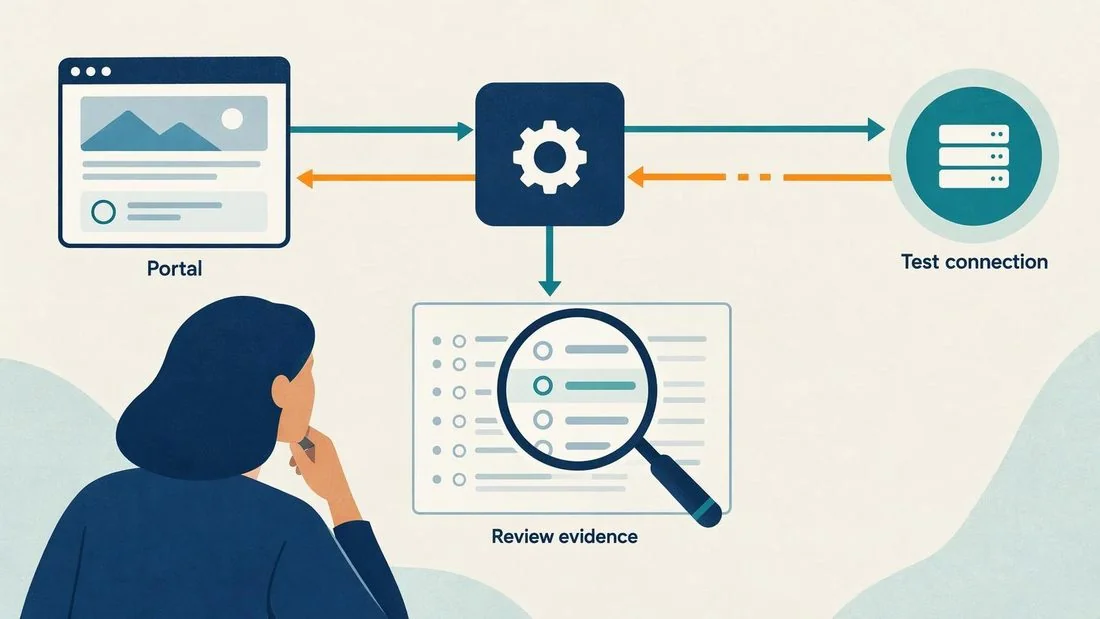
Identify the path you want to approve and the supporting components it uses. A booking review might involve the portal interface, application logic, test credentials, stored test records, and a way to inspect responses.
Not every component needs the same capacity as its live counterpart for that review. The application behavior may need to match closely, while a smaller environment may be adequate for a limited buyer walkthrough.
Record what a substitute cannot prove
A simulated response can help you inspect how the portal displays a success or error. It cannot, by itself, prove that the intended external connection works or that the live service will behave identically.
A more complete environment can expose more integration behavior, but it also creates additional configuration and maintenance work. The best travel portal proposal for your needs explains which decisions its test setup supports and which require a separate check.
Keep capacity testing separate from functional acceptance. An environment that supports a reviewer clicking through a booking path is not automatically suitable for measuring live-scale performance.
Who will prepare and run the tests?
An available environment is not a completed test. Your budget needs a clear division between technical checks, business acceptance, and any specialist review required by the proposed scope.
Assign work according to the evidence each reviewer can provide. A developer can investigate an application error; a business reviewer can decide whether the booking flow presents the information needed for approval.
Budget for preparation and evidence
Test execution needs something to execute. Define the review paths, test accounts, sample data, and expected outcomes before estimating the effort.
A useful acceptance record identifies the version reviewed, the action taken, the expected result, and the actual result. This gives the buyer and implementation team a shared basis for deciding whether a fix needs another review.
Include the work of resetting data or restoring a known starting point when the test requires it. Otherwise, later reviewers may encounter a different state and be unable to reproduce the result.
Keep external testing resources visible
If your approval requires an independent security assessment, a load-testing service, or another specialist, place that work outside ordinary acceptance unless the proposal expressly includes it. Name the deliverable and the party commissioning it.
Separate an assessment from remediation. A report can identify findings, while fixing them and reviewing the fixes are different tasks; the purchasing agreement should allocate that work rather than treating the report as the whole outcome.
Define how long staging stays available and who controls it
Budget the period in which people actually need the environment, including preparation, review, and agreed retesting. Avoid tying availability only to the developer's handoff if buyer acceptance happens afterward.
The commercial treatment might be an included period, a recurring resource charge, or a separately maintained setup. Establish the applicable terms rather than assuming one model applies to every portal arrangement.
Availability also needs a meaning. A hosted environment that exists but lacks working test credentials may not support the acceptance task you are paying to complete.
Account for pauses and extensions
Buyer review can depend on an outside response, a fix, or internal approval. Agree on the event that ends included staging access and how an extension is handled if acceptance remains incomplete.
For an environment used only occasionally, pausing resources may be worth considering if the architecture and agreement permit it. The trade-off is the effort to restore configuration, credentials, and test data before the next review.
Separate administrative control from approval authority
Name who can deploy a new version, change settings, reset test records, and remove access. Those permissions are different from the buyer's authority to accept a release.
Also identify who holds the hosting and external service accounts. If those belong to another party, your agreement should explain how access and environment materials are handled when the engagement ends.
Budget this narrowly as environment administration. Do not let the staging line become a substitute for a broader support or ongoing-development agreement.
A buyer example: a booking flow with an open integration question
Say you are reviewing a portal that sends a booking request through an external connection. Your concern is what the portal does if the response is interrupted: does it show a clear status, and can your reviewer determine what happened?
A visual preview lets you judge the screen design, but it does not exercise the request path. Access to a test endpoint helps with the connection, but your own portal still needs a deployed version and a way to inspect the result.
For this decision, favor a proposal that includes a reviewable application with suitable test access and evidence for the interrupted-response case. A complete duplicate of live-scale infrastructure is not necessarily justified; the missing behavior is the request-handling path, not proof of peak capacity.
Choose test resources around the open question
| Proposed setup | What it helps you review | What remains outside that review |
|---|---|---|
| Visual preview with sample screens | Layout and status wording | Actual request handling and integration behavior |
| Test endpoint access without a deployed portal | External request and response behavior | The full buyer-facing application path |
| Deployed pre-production portal with suitable test dependencies | The application path and recorded outcomes | Live-scale capacity and any behavior not represented by test services |
A simpler review can justify a smaller setup
Now picture a buyer approving only a wording change in an otherwise unchanged interface. If the review concerns display rather than transaction behavior, an appropriate preview may answer the question without a full integration exercise.
The difference is uncertainty, not the number of reservations involved. A single booking path with an unclear outcome can need more investigation than several straightforward display checks.
Compare proposals against the same acceptance task
Give each proposal the same acceptance brief: the release to review, the behavior to exercise, the reviewers who need access, and the evidence required for approval. Then compare the resources and responsibilities attached to that task.
A lower staging line is not automatically a saving if it leaves necessary setup or testing with your team. Conversely, a larger environment is not better value if it funds capacity or services your review does not use.
Keep the broader travel application development budget separate. Here, you are comparing the incremental resources needed to approve the release, not reopening every feature and implementation choice.
Write deliverables that a buyer can recognize
Replace an unqualified promise of testing with a description of the reviewable version, available dependencies, access period, and result record. The description should also distinguish real test connections from simulated responses.
For example, your purchase brief could require a deployed pre-production version of the agreed release, approved test data, access for named reviewers, and recorded outcomes for the agreed booking paths. That describes an acceptance resource without prescribing a vendor's infrastructure design.
Avoid paying for the same work twice
Reconcile the staging line with implementation, quality assurance, and hosting scope. If setup appears in both development and staging, establish whether the latter covers additional work or repeats an existing deliverable.
Keep a separately scoped amount separate from an included item, and mark buyer-performed work as buyer responsibility. Once those distinctions are clear, the comparison can reflect both cash outlay and the internal effort needed to finish acceptance.
Before approving a staging budget
- Give each proposal the same acceptance brief
- Identify the reviewable version and test dependencies
- Distinguish real test connections from simulations
- Define access duration through review and agreed retesting
- Assign test preparation, execution, and result recording
- Separate included, separately scoped, and buyer-owned work
- Check for duplicate setup charges across budget lines
Establish what belongs to your proposed Xeni arrangement
If you are considering Xeni through a proposed API or no-code arrangement, use the same distinction between access, environment resources, and test execution. Neither route should be treated as a promise that every pre-production resource belongs to the proposed scope.
For an API-based proposal, focus the discussion on where your application will run and which dependencies support its review. For a no-code proposal, focus on how you would review changes before they affect the intended live experience.
We can discuss your proposed scope through Contact Us. Bring the acceptance task and ask which pre-production resources, if any, are included, which you would arrange separately, and who owns the testing work.
Clarify the testing scope before approving the proposal
Ask which pre-production resources, if any, belong to your proposed Xeni API or no-code arrangement.
Explore more from Xeni
Frequently Asked Questions
Approve a testable scope, not an unexplained staging line
A usable staging budget connects resources to the decision you need to make before release. Approve it when the proposal identifies the reviewable environment, its limitations, the testing responsibilities, and the commercial treatment of access through acceptance.