A hotel booking engine quote needs more detail than how many websites you plan to launch. A domain that redirects to an existing booking site is different from a separately branded site with its own checkout, customer communications, and operating team.
Start by describing what customers will use and who will run it. Then separate that structure from the technology you hope to share. This lets you compare proposals without treating a domain, a brand, and an account as interchangeable, or assuming that technical reuse automatically reduces the quoted cost.
Define the storefront before counting it
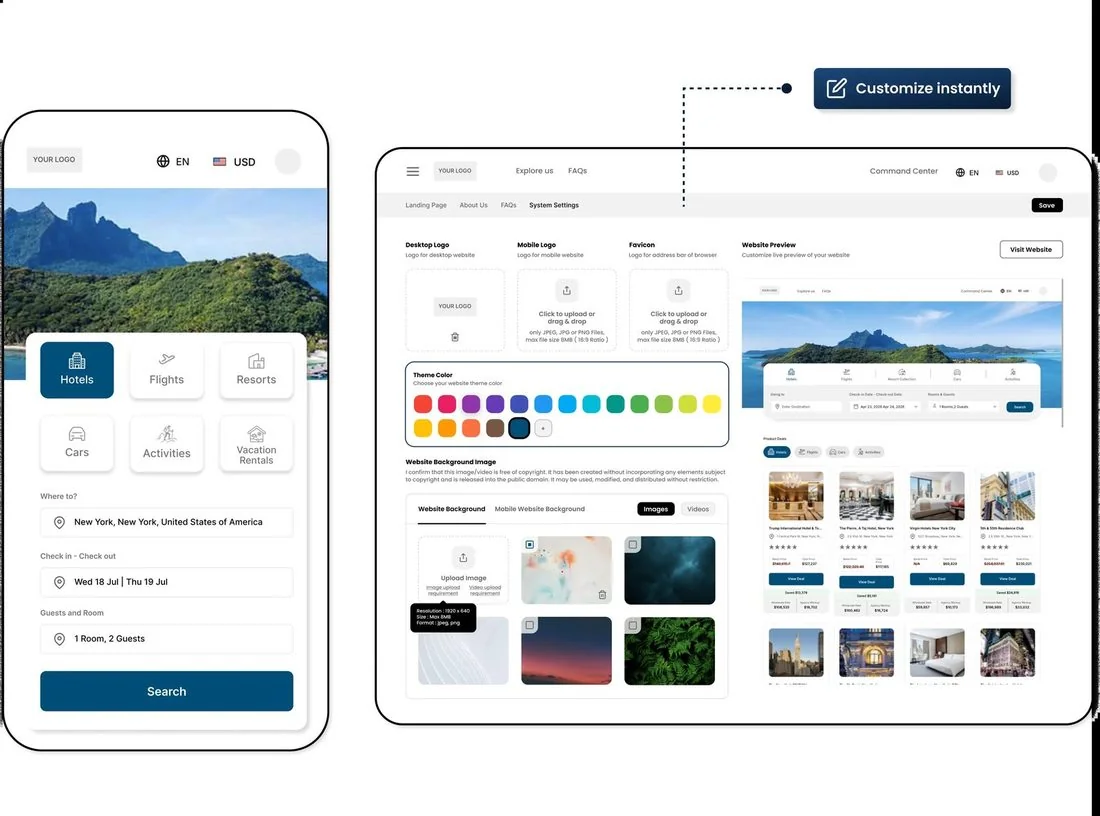
For quote planning, treat a storefront as a customer-facing booking experience with a defined identity and operating arrangement. That is a working description for your request, not a universal licensing definition. The provider still needs to explain how its contract counts that experience.
Record the address customers enter, the brand they see, where they complete the booking, and which business is responsible for the transaction. These details establish whether your request concerns another entrance to an existing site or a separately operated booking experience.
Keep the following concepts separate when describing your plan:
- A domain or subdomain is an address used to reach a site.
- A brand is the identity presented to customers.
- A storefront is the booking experience you want customers to use.
- A backend account or environment is part of the technical and administrative arrangement.
A new address can lead to the same storefront. Conversely, different branded experiences might be intended to share infrastructure. Neither arrangement establishes the provider's commercial terms.
Your request should therefore state both the customer-facing structure and the proposed technical arrangement. Ask the provider to translate those details into its own billable units rather than accepting an undefined label such as "additional website."
Which storefront arrangement matches your plan?
Choose the arrangement that describes how customers and operators will use the sites. The comparison below identifies differences to put into a quote request; it does not imply that any provider supports every arrangement.
The useful distinction is where an additional site changes responsibility or functionality. A new logo is a different request from independent customer service, separate reporting access, or a partner operating under its own business identity.
Storefront arrangements and the scope each introduces
| Arrangement | Customer experience | Operating structure | What the quote should address |
|---|---|---|---|
| Additional address leading to an existing site | Customers reach the same booking experience | Existing operator and booking workflow | Domain connection or redirect work and whether the address affects licensing |
| Separate branded site with a shared operator | Customers see a distinct identity | Central team handles bookings and service | Brand configuration, permitted shared systems, and any additional storefront charges |
| Separate branded site with independent staff | Customers use a distinct booking experience | Different teams need access and reporting | Access separation, reporting boundaries, support ownership, and commercial treatment |
| Partner-operated storefront | Customers book through a partner identity | Another business participates in operation | Partner permissions, contractual responsibility, data access, and applicable licensing |
Choose separation only where it solves a real need
If customers only need another way to reach the same booking experience, a separate storefront may add work without solving an operating problem. If distinct brands require different communications or ownership, a shared appearance may be insufficient even when the underlying search process is similar.
Write down the reason for each separation. That reason helps the provider distinguish a necessary requirement from a preferred design choice and explain the cost of each.
Shared infrastructure and permission are different questions
A shared backend is an architecture choice. Permission to use it across brands, domains, operators, or legal entities is a commercial question. A proposal needs to answer both.
Describe what you want to share rather than requesting a shared account without explanation. Your plan might call for a common hotel-search integration while keeping customer communications and staff access separate.
Sharing can reduce duplicated work in your intended design, but it also creates dependencies. A change to a common component may need testing across every experience that uses it. Separate systems can provide more independent control, with the trade-off of maintaining those systems separately.
Separate booking functionality from brand presentation
Search, room selection, availability checks, and the transition into booking belong to the functional scope. Logos, page text, navigation, and customer-facing identity belong to presentation. State whether each storefront needs the same workflow or a different one.
If you are defining a custom integration, our guidance on checking room availability and pricing is relevant technical reading. Use the required workflow to frame the implementation discussion; do not infer storefront permissions from a technical resource.
Describe access and information boundaries
Identify who should see booking records, manage settings, and receive customer requests. A centralized team and independent partner teams have different access needs even if customers see similar pages.
For a custom booking flow, our pricing confirmation token lifecycle guidance is another technical topic to review. Keep the handling of booking state separate from the question of which teams may access each storefront's information.
How should storefront scope appear in the price?
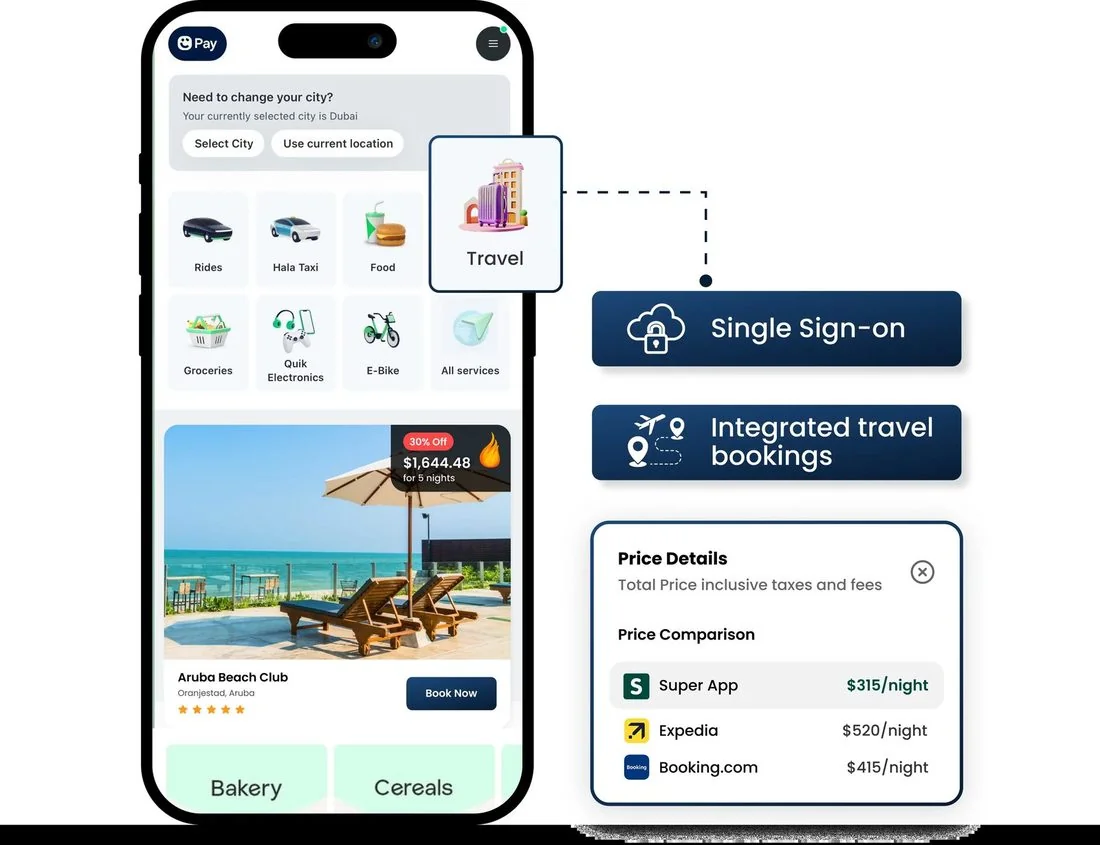
The quoted price should identify what is being purchased and the event that creates an additional charge. A total without a defined unit leaves you unable to evaluate the cost of your next launch.
Keep launch work, recurring access, and activity-related charges separate in the proposal. These are categories for comparison, not a claim that every provider uses each one.
Launch work
Have the proposal distinguish shared implementation from work repeated for each storefront. Relevant work may include branding, address configuration, booking-flow changes, access setup, and testing.
If a provider combines everything into a setup amount, request a description of what that amount delivers. The key is whether it covers the full planned structure, not whether every task has an individual price.
Recurring commercial scope
Identify whether recurring charges are tied to an account, storefront, brand, domain, business entity, or another defined unit. If the proposal includes several customer-facing experiences under a common fee, those permitted experiences should be named or clearly described.
Also establish how an additional experience enters the agreement. A new brand, replacement domain, and independently operated partner site should not be treated as identical changes without explanation.
Activity-related charges and external work
If the proposal includes usage or transaction charges, identify the measured activity and whether it is combined across storefronts or evaluated separately. The same storefront structure can produce different budgets depending on how activity is counted.
Keep work performed by your own team or another contractor visible alongside the provider's price. A proposal that excludes site development is not directly comparable with a proposal that includes a finished customer-facing experience.
Work through a shared-operator example
Say you operate an established travel brand and want to launch another branded hotel-booking site. The same team will handle customer requests, but visitors should see the new brand throughout the booking experience.
A redirect to the existing site does not meet that identity requirement if customers immediately encounter the original brand. A distinct presentation with a shared operator is the better description of your intended structure.
Your quote request should explain that you want separate customer-facing branding, common operational ownership, and shared booking functionality where permitted. It should also identify whether confirmations must carry the new identity and whether reporting must distinguish the brands.
Now picture the new site being operated by an independent partner instead. The visual requirement may stay the same, but the decision changes: staff access, customer-service ownership, data boundaries, and partner permissions become part of the scope.
In the shared-operator case, ask for the cost of the required presentation and reporting differences without assuming an entirely separate platform is necessary. In the partner-operated case, evaluate the operating and contractual separation before choosing a shared technical arrangement.
The number of sites alone does not explain the difference. Responsibility does. A single independent operator with access restrictions can introduce more questions than several branded experiences managed by the same team.
Compare proposals using the same scope
The best hotel booking engine for your plan is the one that supports your required customer and operating structure on terms you can evaluate. A lower headline amount is not a meaningful advantage if it excludes an essential storefront or assigns necessary work to your team.
Give hotel booking engine providers the same description of the intended launch. Keep optional features and later expansion separate so that the base proposals address the same deliverable.
When proposals differ, map each difference to a requirement. If one includes separate staff access and another assumes a central administrator, the difference is scope before it is price.
- Match the named brands and customer-facing experiences to your launch plan.
- Identify who supplies and maintains each part of the booking experience.
- Distinguish included work from optional work and exclusions.
- Check how future changes affect charges and permissions.
Compare totals over the same period and using the same activity assumptions. Where a cost depends on usage, retain the calculation method rather than treating an estimate as a fixed commitment.
Do not substitute hotel room prices, hotel management software subscriptions, or general website development budgets for storefront licensing. Those amounts answer different questions and do not establish the cost of your intended booking structure.
Before comparing quote totals
- Match named brands and booking experiences to launch scope
- Identify who supplies and maintains each part
- Separate included work, optional work, and exclusions
- Check future changes to charges and permissions
- Compare totals over the same period
- Use the same activity assumptions
- Retain the calculation method for usage-based costs
Discuss your intended structure with Xeni
Review Xeni's homepage as your starting point, then bring the storefront structure you want to discuss. For this decision, the useful outcome is an answer about feasibility and commercial scope for that specific arrangement.
A concise description is enough to start: which brands customers will see, which addresses they will use, who operates each experience, and which functions you want to share. Separate launch requirements from later expansion.
You can then send that description through Contact Us. Ask us to address the intended structure rather than assuming that additional domains, shared systems, or partner operation are included under the same terms.
For example, describe separate branded booking experiences managed by a central team, with distinct customer communications and shared functionality where permitted. That gives the discussion a usable scope without committing you to an architecture before feasibility is established.
Have a storefront structure in mind?
Send the customer-facing and operating details to discuss feasibility and commercial scope.
Explore more from Xeni
Frequently Asked Questions
Price the operating structure, not just the website count
Before accepting a quote, make sure it describes the customer-facing experiences you intend to launch and the systems and responsibilities behind them. Keep the storefront definition, included work, permitted use, and expansion terms together so that a later change can be evaluated against the original agreement.